
It’s not you, it’s your body clock
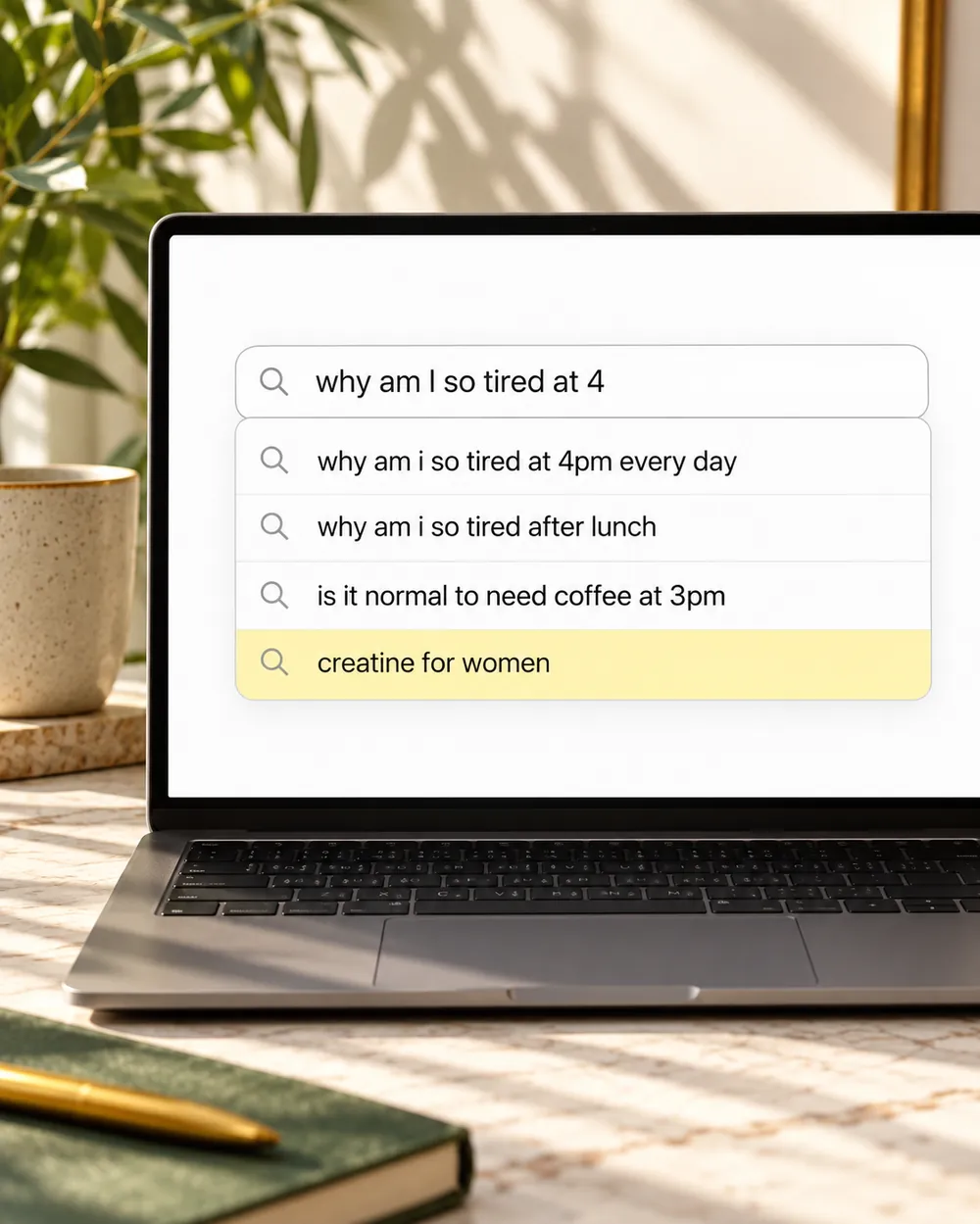
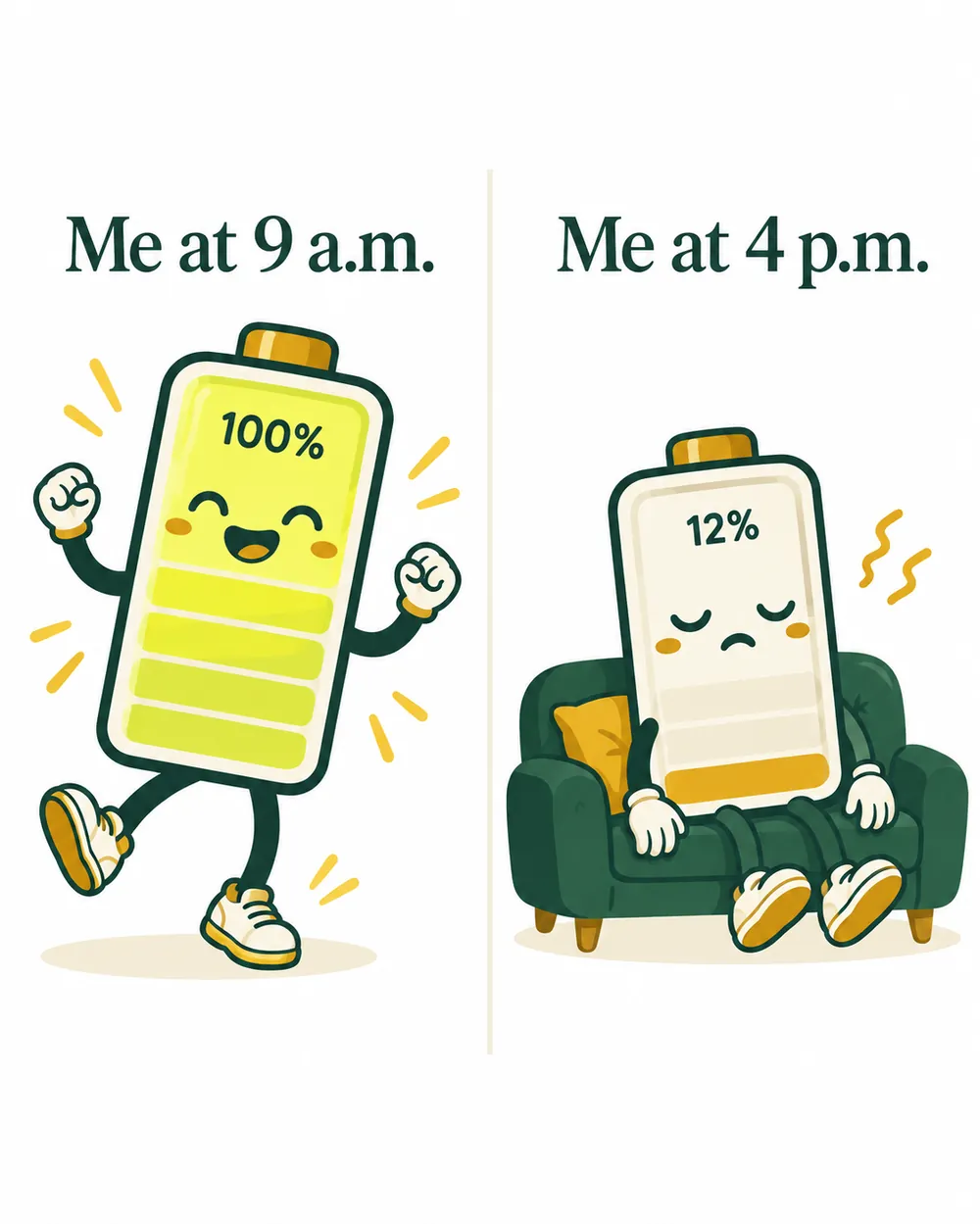
It’s mid-afternoon, the meeting is on slide 34, and your eyelids have started making their own decisions. Was it the sandwich?
Mostly no. Sleep researchers have known for decades that sleepiness has two peaks a day: a big one at night and a smaller one in the middle of the afternoon.13 It shows up even when people skip lunch and don’t know what time it is.2 One driving study called the dip “largely unrelated to lunch,” and found a bad night makes it worse.4
That last part is key. The dip itself is mild. What turns it into a crash is usually last night (and sometimes a very big lunch).
The sleep math many women are running
About 3 in 10 US women sleep under 7 hours a night. Women also have more trouble falling asleep and staying asleep than men, and only about half wake up feeling rested most days.20 Experts recommend 7 hours or more, regularly.21
Then perimenopause arrives. In national data on women aged 40 to 59, short sleep jumped from about 1 in 3 before menopause to more than half in perimenopause.22
So if your 3 p.m. got worse in your 40s, you’re probably not imagining it.
The 10-minute nap (yes, ten)
Naps are the best-tested fix, and the studies are oddly exact about length. In one, young adults slept only about 5 hours, then napped at 3 p.m.:5
- 5 minutes: barely helped.
- 10 minutes: the winner. Alertness, mood and thinking improved right away, and the boost lasted up to about two and a half hours.
- 20 minutes: helped, but only after about 35 minutes.
- 30 minutes: groggy first, then better.
Naps of 30 or 90 seconds did nothing.6 The trick seems to be a few minutes of real light sleep, not just closed eyes.7
NASA even tested cockpit naps. Long-haul pilots who rested for about 26 minutes had far fewer dozing moments late in the flight: 34, versus 120 for pilots who didn’t rest.8
Can’t nap at your desk? Most of us can’t, unless we’ve perfected the “reading something very closely” face. Try these instead.
Daylight, stairs and a glass of water
Light. Sixteen women aged 33 to 43 sat by a sunny window for 30 minutes after lunch, and felt less drowsy for at least an hour.9 After short nights, bright afternoon light also beat dim light for sleepiness and reaction time.10
Movement. Ten minutes of walking up and down stairs made sleep-short young women feel more energized than 50 mg of caffeine (about half a cup of coffee).11 In an older study, a brisk 10-minute walk lifted energy for two hours. A candy bar gave a quick lift, then more tiredness an hour later.12 (The candy bar’s PR team has never recovered.)
Water. In young women, losing just 1.36% of body weight in water (about a pound and a half for a 120-pound woman) hurt mood, energy and focus and brought on headaches, though most thinking tests held up.16
None of these is a miracle. All of them are free, and all of them beat staring harder at the screen.
What about lunch?
Size matters most. After a short night, drivers who ate a heavy lunch (922 calories) drifted in their lane more than drivers who ate a light one (305 calories).4
Carbs versus fat? The studies disagree. In one older study, women (but not men) felt sleepier after a high-carb meal than a high-protein one, and people over 40 lost focus after the high-carb lunch.13 A lunch with nuts protected memory better than a high-carb one.15 But a small study in men found a high-fat lunch was worse.14
A lighter lunch with some protein is a sensible experiment. Nobody has proven an anti-slump meal.
When to stop the coffee
Caffeine works, and we’re not anti-coffee. But it sends the bill at night. In one well-known study, 400 mg taken 6 hours before bed still cut more than an hour of sleep, and people didn’t notice it in their sleep diaries.17 Europe’s food-safety agency says even about 100 mg close to bedtime can affect sleep in some adults.18
A surprise: in a 1980 study, it took about 6 hours for the body to clear half its caffeine in women not on the pill. In women on the pill, it took nearly 11 hours.19 Those were older, stronger pills, so take it as a nudge to watch your timing, not a rule. And in one survey at a menopause clinic, women who drank caffeine were a little more bothered by hot flashes.24
So the 4 p.m. latte that rescues today may be borrowing from tomorrow.
Where does creatine fit?
Honestly, not here yet. Creatine has been tested during a full night without sleep: one big dose during 21 hours awake improved memory and speed of thinking.23 But nobody has tested it on an ordinary afternoon dip, or at the usual 3 to 5 g a day for daytime alertness. For the full picture on creatine and the brain, see our brain fog article.
What we don’t know yet
- The best nap length for women in midlife: the nap studies were in young adults and pilots.
- The best lunch: no big, modern study in women compares typical lunches.
- Light and water at a real desk: the studies were short and done in labs.
- Perimenopause and the afternoon dip: we know short sleep peaks then, but nobody has measured the slump itself.